

New Products Are Born from New Industries: The Fracking Ramp
Have you ever had an idea for developing a new product? Maybe its something you drew up years ago and never followed up, or it’s someone else’s idea and you’re following up on it. Nevertheless, we have a great story to share with you about the birth of the fracking ramp and a rapidly growing industry – fracking. The information we have to share will not fit into a short story, so instead we’re going to break it up into three sections:
1. How products are born: the fracking ramp
2. How large capacity hoses need a ramp
3. How the fracking ramps can be used by others for other purposes
What Is Hydraulic Fracturing, AKA Fracking?
Fracking is a hydraulic process that fractures a rock layer using pressurized fluid. The process releases petroleum, natural gas, or other substances for extraction. This type of fracturing comes from a wellbore drilled into reservoir rock formations.
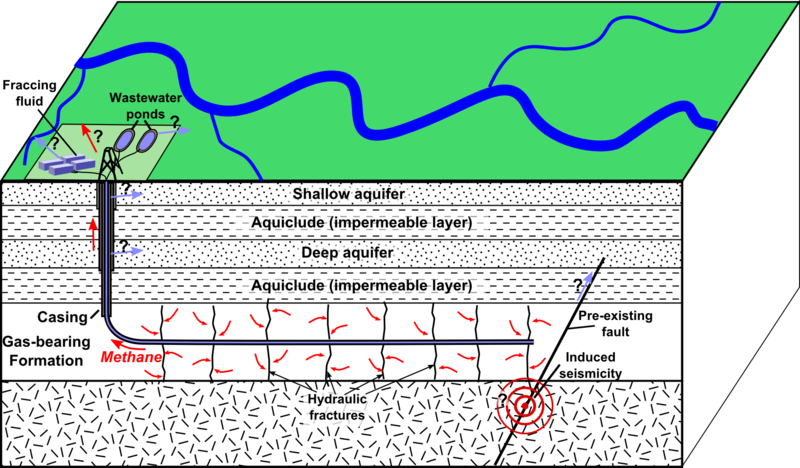
The US supply of natural gas is abundant but located deep down in the earth where it is difficult to extract. The hydraulic fracking process injects fluids, sand, and proppant to crack open and release natural gas.
Why Do We Need a Fracking Ramp?
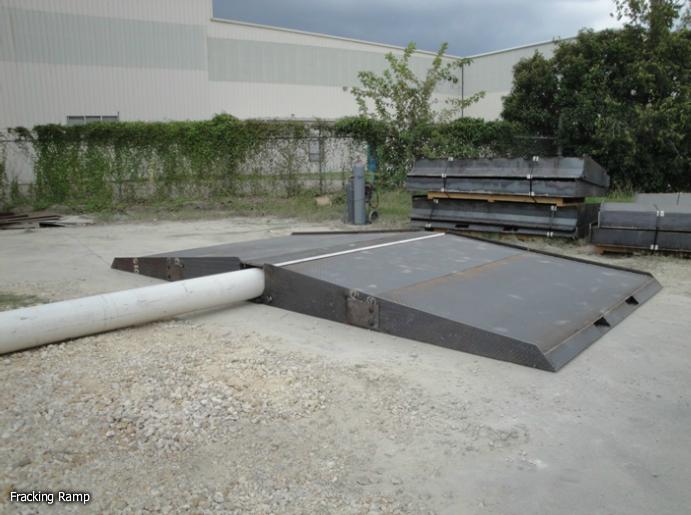
Without proper protection, hoses and pipelines can become damaged, causing:
- Operational downtime
- Equipment failures
- Safety hazards
- Environmental incidents
- Costly repairs
Fracking ramps create protected crossing points that allow equipment to move freely while protecting critical infrastructure.
What Is a Hydraulic Fracking Ramp?
A hydraulic fracking ramp is a heavy-duty crossover system designed to allow trucks, tankers, and oilfield equipment to safely travel over hoses, pipelines, and utility lines used during hydraulic fracturing operations. These ramps protect critical infrastructure from crushing, abrasion, and punctures while maintaining safe vehicle access across active oilfield sites.
Designing the Fracking Ramp
Until recently, there was no ramp available on the market designed for fracking on until a major oil corporation contacted us to design this specialized ramp. In the preliminary stages, there were many questions to be answered:
Key Design Considerations for Fracking Ramps
When engineering a fracking ramp, several factors must be considered:
- Hose and pipeline diameter
- Vehicle weight and axle loads
- Terrain conditions
- Required crossing length
- Environmental exposure
- Site mobility requirements
- Load capacity requirements
- Temporary versus permanent deployment
From Model to Production
After these questions are answered, an engineer at Handi-Ramp creates a computer model of the ramp to test various aspects of the design. Once approved, it moves to the production phase where skilled craftsmen are given detailed information about the build.
How Hydraulic Fracking Ramps Work
Fracking ramps create a protected channel beneath the ramp structure where hoses, pipelines, and utility lines can safely pass. Vehicles travel over the ramp rather than directly over the hose, preventing crushing and abrasion damage while maintaining uninterrupted fluid transfer operations.
Common Applications for Hydraulic Fracking Ramps
Hydraulic fracking ramps are commonly used in:
- Hydraulic fracturing operations
- Well completion projects
- Oil and gas production sites
- Water transfer systems
- Temporary pipeline crossings
- Drilling operations
- Energy infrastructure projects
- Industrial fluid transfer operations
Have questions?
Feel free to contact us at info@handiramp.com or by calling 800-876-RAMP (7267).